
The Tale of Subahu the White Fox
547 Jataka Tales
75

The Tale of Subahu the White Fox

Buddha24Ekanipāta
Listen
In ages past, when the Bodhisatta was yet a bodhisatta, he was born as a white fox of immaculate fur, pure as the driven snow. This fox dwelt in a bountiful forest known as Subahu, a name bestowed upon it because its paws moved with the swiftness of the wind, and its voice resonated with a melody as sweet as the sound of a lute. Subahu was a fox of exceptional intelligence and keen wit, possessing the remarkable ability to navigate the perils of the wild with grace and ease. The creatures of the forest held him in high regard and affection, for Subahu never caused harm to any being; instead, he offered assistance and protection. One day, a hunter, driven by avarice and a thirst for rare pelts, entered the forest. This hunter, notorious for his cruelty, had heard tales of the magnificent white fox, its fur said to be the finest in all the land. He set his sights on capturing Subahu, believing its pelt would fetch a king's ransom. The hunter laid elaborate traps, cunningly concealed amidst the undergrowth, designed to ensnare even the most wary of creatures. Subahu, with his heightened senses and innate wisdom, perceived the presence of the hunter and the danger he posed. He observed the hunter's movements from a safe distance, noting the placement of the traps. While other animals, blinded by fear or ignorance, might have fallen prey, Subahu remained vigilant. He understood that direct confrontation would be perilous, and that escape was paramount. Instead of fleeing the forest entirely, Subahu devised a plan. He began to subtly lead the hunter on a wild chase, not towards his own den, but deeper into the most treacherous parts of the forest. He would appear for a fleeting moment, a flash of white against the verdant backdrop, and then vanish, always just out of reach. The hunter, blinded by his pursuit, followed relentlessly, his hope of capturing the prize growing with each elusive glimpse. Subahu skillfully guided the hunter through thorny thickets, across treacherous ravines, and into areas where the ground was unstable and dangerous. He knew these places well, having navigated them countless times. As the hunter, exhausted and increasingly desperate, struggled through the difficult terrain, he became careless. Subahu, watching from a secure vantage point, saw his opportunity. The hunter, in his haste, stumbled into one of his own cleverly laid snares, a trap meant for the very creature he sought. The snare snapped shut, trapping the hunter's leg securely. His cries of pain and frustration echoed through the trees. Subahu, witnessing this turn of events, felt no malice, only a quiet understanding of the consequences of greed and ill intent. He did not approach the trapped hunter. Instead, he let the hunter endure his predicament, a stark lesson in the futility of his cruel pursuit. Eventually, other creatures of the forest, alerted by the hunter's cries, discovered his plight. They did not offer immediate aid, for they too had suffered under his cruelty. However, when the hunter's cries became truly desperate, and he seemed on the verge of succumbing to his injuries and despair, some of the less fearful animals, perhaps guided by the subtle, unseen influence of the Bodhisatta's compassion, eventually helped him to free himself, albeit with great difficulty and pain. The hunter, humbled and broken, limped out of the forest, never to return, his greed replaced by a profound fear and respect for the wild and its wise inhabitants. Subahu, the white fox, continued to live in his forest, a guardian and a symbol of wisdom and resilience.

— In-Article Ad —

💡Moral of the Story

True wisdom lies in sharing and compassion, recognizing that collective well-being is the greatest wealth.

Perfection: Wisdom and Generosity

— Ad Space (728x90) —

More Jataka Tales You May Enjoy

Muni Jataka
247Dukanipāta

Muni Jataka

Muni JatakaLong ago, in the verdant kingdom of Kasi, there lived a sage named Muni. He was not an or...

💡 Inner peace and wisdom are the greatest remedies for all forms of suffering, and true strength lies in mastering one's own mind.

Sasa Jātaka
498Pakiṇṇakanipāta

Sasa Jātaka

Sasa JātakaIn the deep, verdant forests of ancient India, where sunlight dappled through a canopy of...

💡 Selfless compassion and the willingness to sacrifice one's own well-being for the benefit of others are the highest virtues.

Phra Sang Thong Jataka
326Catukkanipāta

Phra Sang Thong Jataka

Phra Sang Thong Jataka In the ancient kingdom of Suvarnabhumi, nestled between shimmering rivers and...

💡 True worth is found not in outward appearances or hidden identities, but in the courage, wisdom, and compassion one demonstrates through their actions.
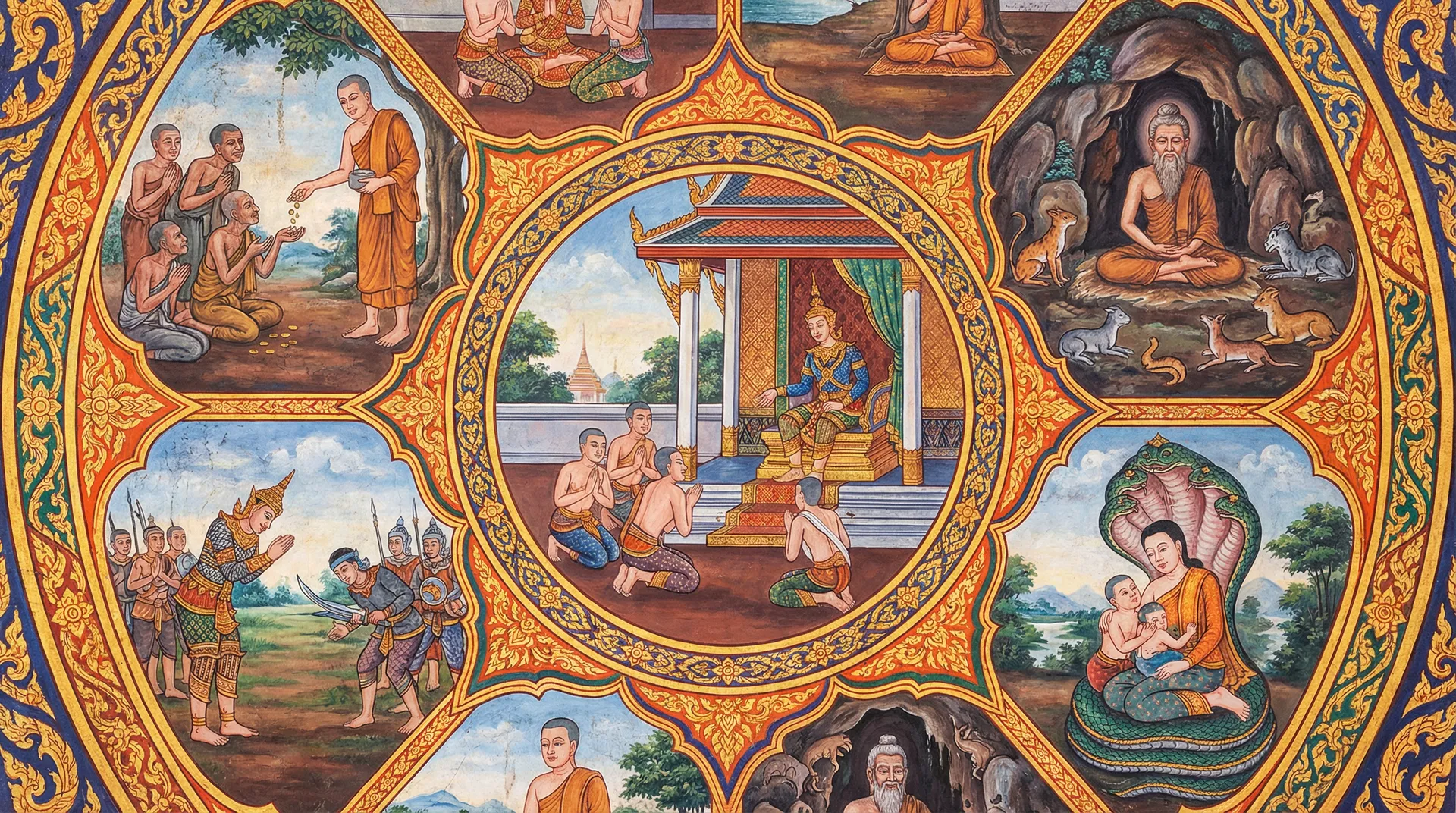
Mugapakkha Jātaka
371Pañcakanipāta

Mugapakkha Jātaka

Mugapakkha JātakaIn the ancient kingdom of Varanasi, nestled beside the serene Ganges River, lived a...

💡 Beware of those who speak with honeyed words but harbor deceit in their hearts. True wisdom lies in discerning the hidden intentions behind actions.

Kakanti Jataka
339Catukkanipāta

Kakanti Jataka

Kakanti Jataka In the sun-drenched plains of northern India, where the wind whispered secrets throug...

💡 Selfless generosity and boundless compassion have the power to overcome even the most severe hardships and can bring forth blessings. True abundance is found in giving, not in hoarding.

Sādhina Jātaka
283Tikanipāta

Sādhina Jātaka

Sādhina JātakaIn the sun-drenched kingdom of Kalinga, ruled a king named Sādhina, whose reign was ma...

💡 True wealth is not measured by material possessions, but by the well-being of one's people and the purity of one's heart. Greed leads to suffering and the decline of prosperity.

— Multiplex Ad —

This website uses cookies to improve your experience, analyze traffic, and display relevant advertisements. Privacy Policy